




What Size Excavator Do You Need? The Complete Guide to Choosing the Right Digger for Your Job
Quick answer:
Mini excavators (1.2 to 3.5 ton) suit tight backyard and residential jobs, midi and compact (5 to 10 ton) handle house site drainage and driveway work, medium (13 to 15 ton) covers most commercial and civil sites, and large (20 to 30-plus ton) is built for bulk earthworks and subdivisions. Keep reading for the full breakdown including wheeled, GPS, short radius and long reach options, or jump straight to our full excavator range if you already know what you need.
Choosing the right excavator changes how long a job takes, how much it costs, and how easily you get it finished. Get it right and you dig, load and move material with no fuss. Get it wrong and you are either underpowered and grinding through the job, or overpowered and paying for size you do not need.
With machines ranging from 1.2 ton mini diggers you can tow behind a ute right up to 30-plus ton heavy excavators, picking the right one comes down to understanding a few key factors: size, type, tail swing, reach, and the ground you are working on. At Pronto Hire we run a mixed fleet across Auckland, Waikato and Northland from brands including Takeuchi, Yanmar, Kubota, Komatsu and more, so whatever the job, there's a machine to match it (exact brand and model on the day will depend on what's available, since our fleet rotates).
This guide walks through everything you need to know to pick the right excavator for your next project, from mini diggers for tight backyard jobs through to large excavators for civil works and bulk earthmoving.
What Do We Mean by "Excavator Size"?
Before getting into the different classes of excavator, it helps to know what "size" actually refers to, because it is not just one number.
Operating weight is the excavator's total weight including the operator and a full tank of fuel. This is the number used to classify machines into tons (a 5 ton excavator weighs roughly 5 tons in full operating condition). It matters because it affects ground pressure, transport requirements, and how much load the machine can safely handle.
Dimensions cover the physical footprint of the machine: its length, width and height. This determines whether it will fit through a gate, down a driveway, or into a tight side yard, and how it needs to be transported to site.
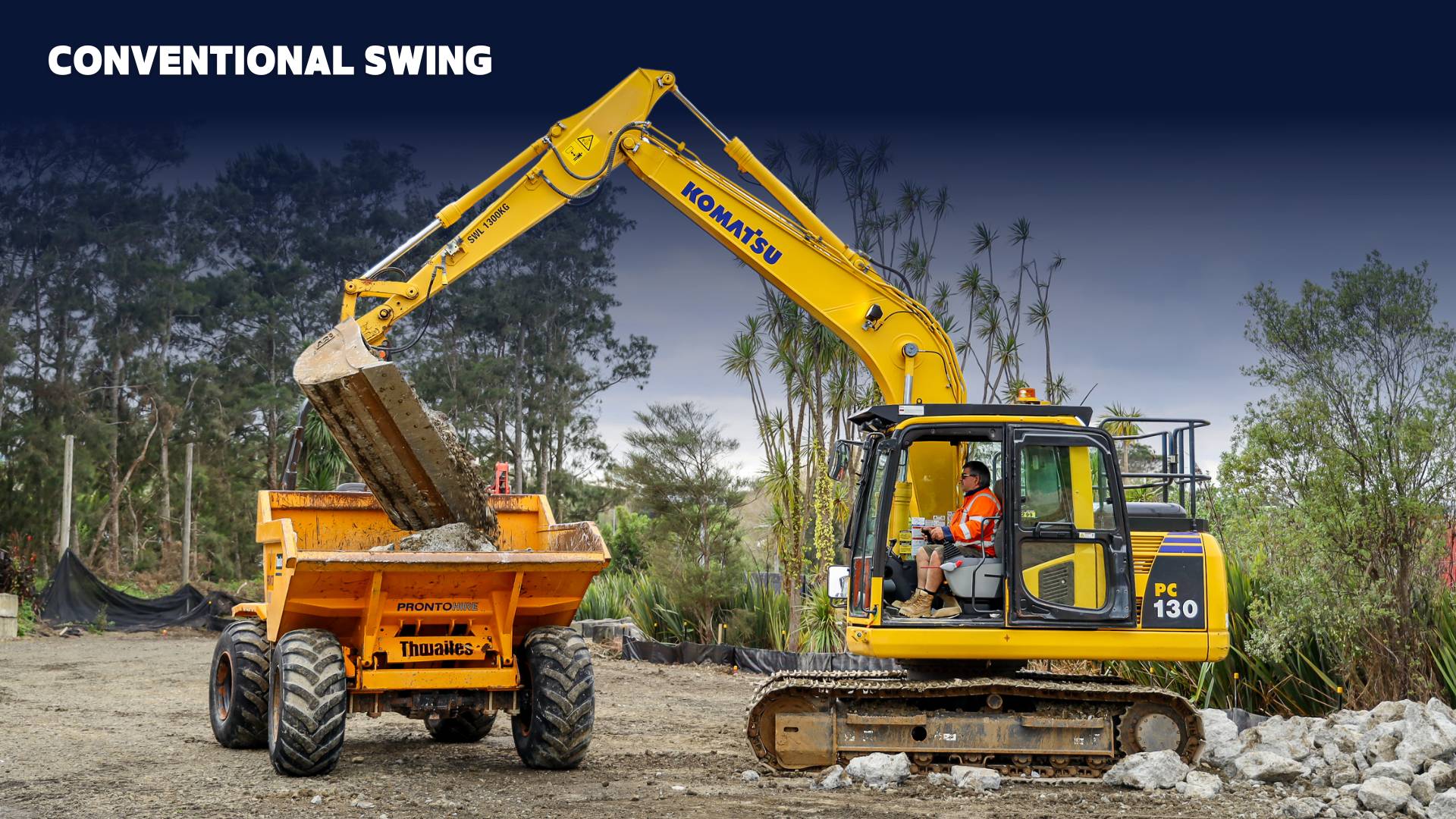
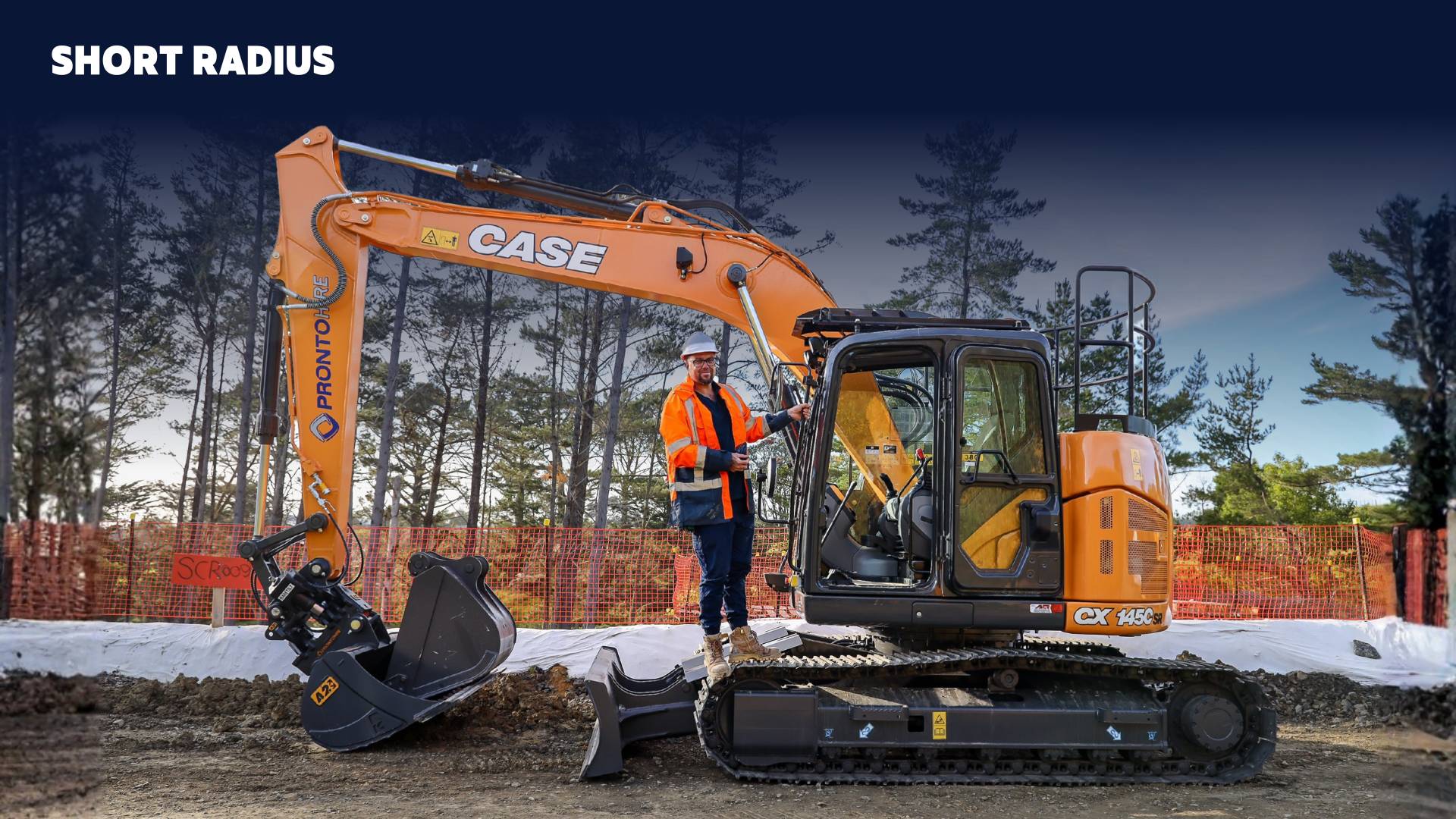
Tail swing is how far the counterweight and cab extend beyond the tracks when the machine rotates. Zero and short tail swing (also called short radius) excavators keep the rear end tucked in close to the tracks, which is why they are the go-to choice for working tight against fences, walls and buildings. Conventional swing excavators have a counterweight that extends out past the tracks when rotating, trading some tight-space manoeuvrability for extra lift capacity and stability.
TYPES OF EXCAVATORS
Not every excavator is built the same way, and the type you choose depends on the ground you are working and the job at hand.
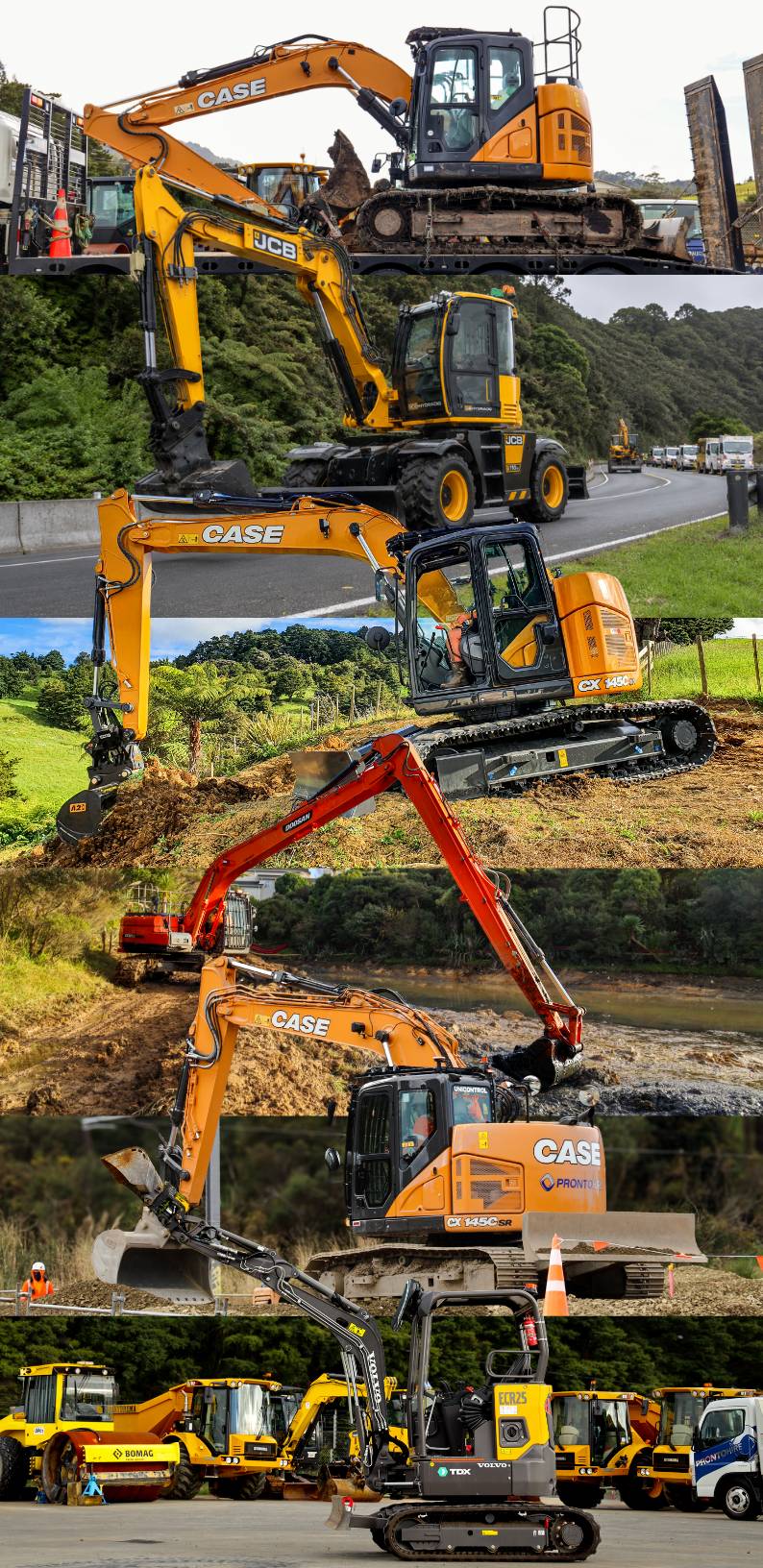
Standard (Crawler) Excavators
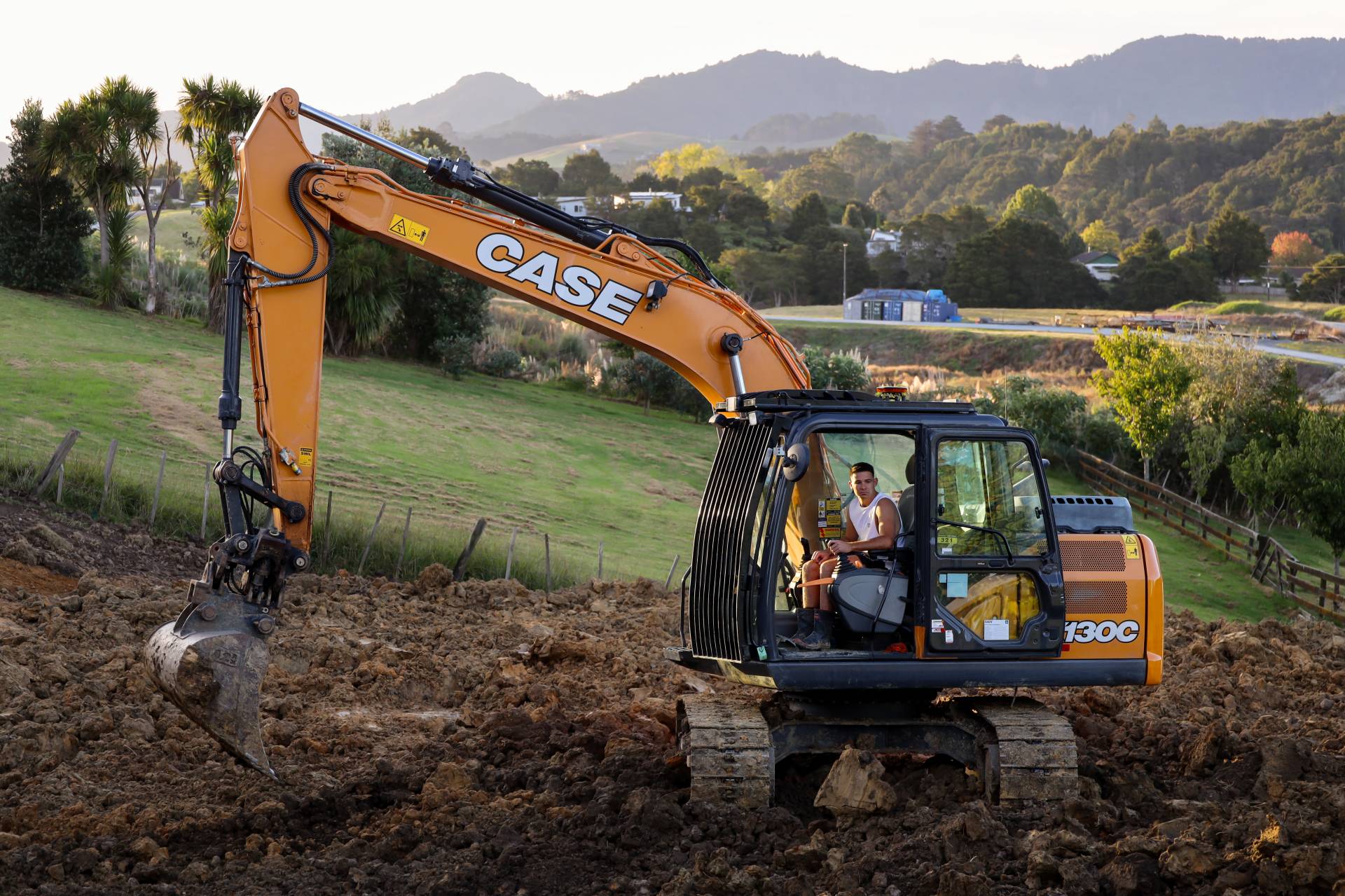
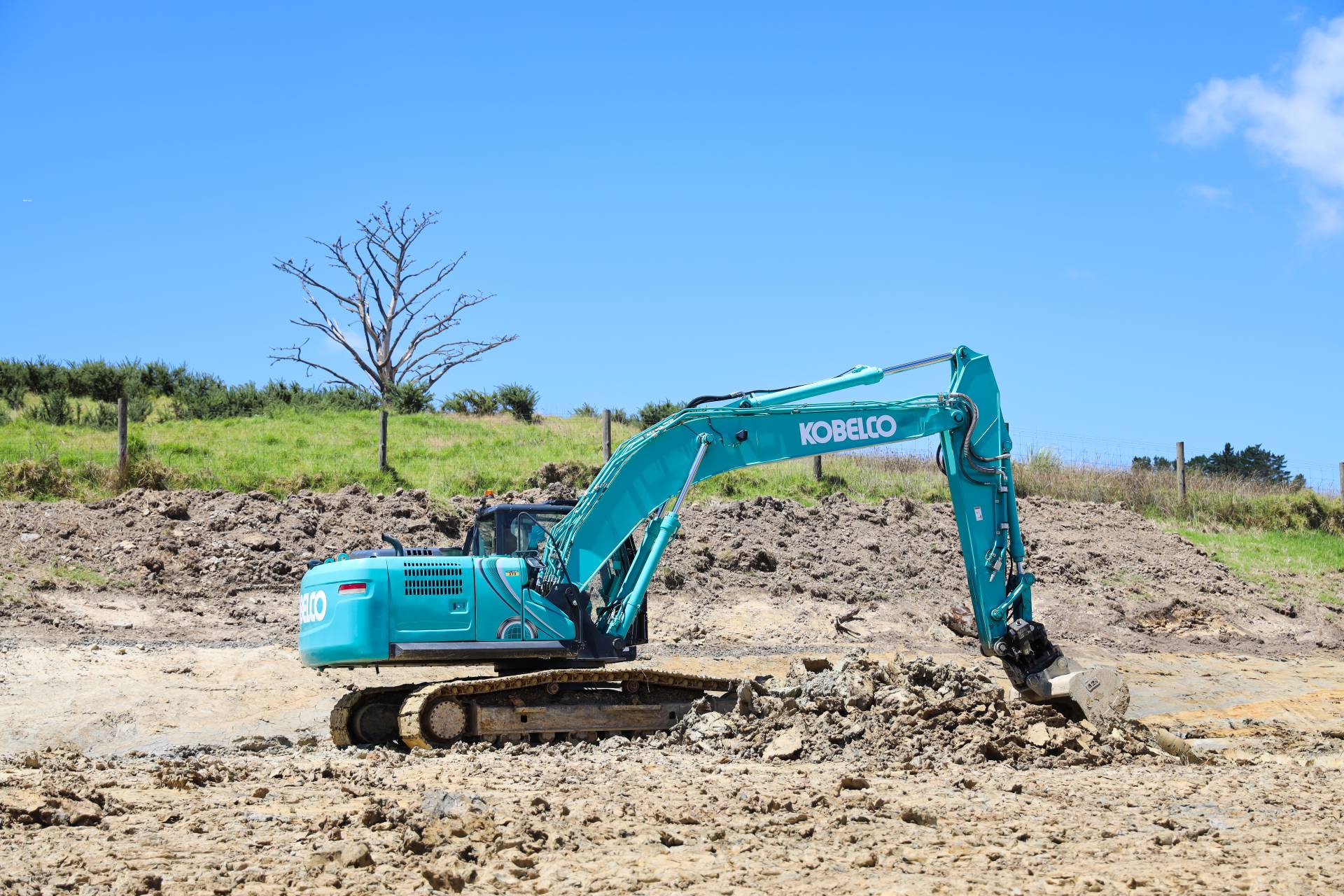
Standard excavators run on tracks and are the most common type you will see on a construction site. The boom, arm and bucket extend, dig, and retract to lift material while the cab rotates a full 360 degrees, so the operator can dig, swing and dump without repositioning the machine. Tracks spread the load over a wider area, which keeps ground pressure low and gives good traction on soft, sloped or uneven ground, useful across Auckland's clay soils, Waikato's flatter but often wetter paddocks, and Northland's mixed rural terrain.
Wheeled Excavators
Wheeled excavators do the same job as a standard excavator but run on rubber tyres instead of tracks. They are quicker to move between sites and across sealed or hard-standing ground such as concrete or asphalt, and they cause less surface damage on finished driveways or roadways. The trade-off is reduced traction and higher ground pressure, so they are not the right pick for soft, muddy or steep ground. If you are working on a sealed yard, roadworks, or shifting material between hard-standing areas, a wheeled excavator earns its keep.
Short Radius (Zero Tail Swing) Excavators
Short radius excavators keep the counterweight within or close to the width of the tracks, so the machine can rotate fully without the back end swinging out into a fence, wall or parked vehicle. These are the excavators to reach for on tight urban sites, driveways, and anywhere you are working close to a boundary.
Long Reach Excavators
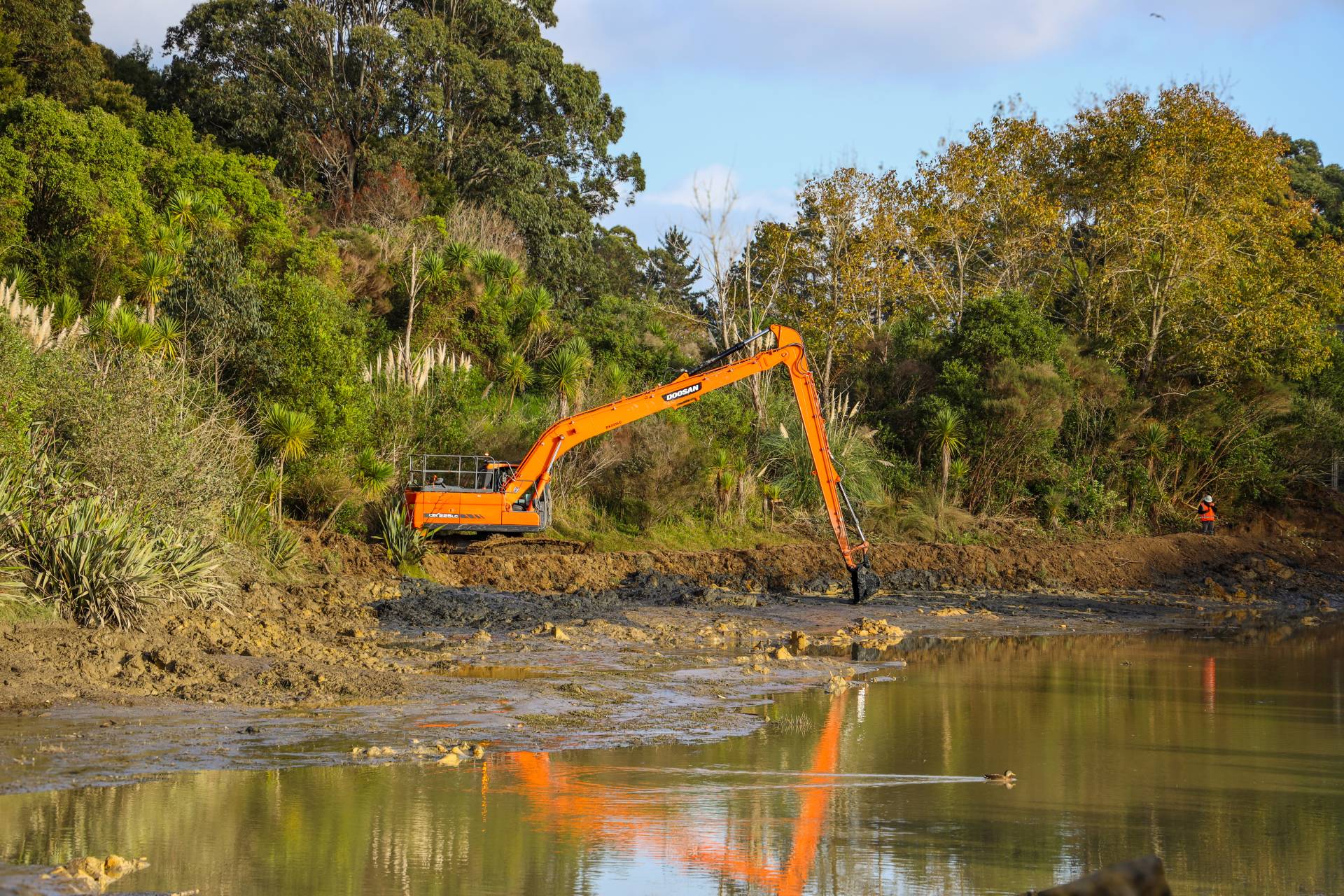
Long reach excavators are fitted with an extended boom and arm so the machine can dig or demolish from further away than a standard excavator, without having to work right at the edge. This makes them useful for reaching across drains, ponds, or riverbanks, and for demolition work where standing back from the structure matters for safety and access.
GPS (Machine Control) Excavators
GPS excavators use satellite positioning and an in-cab display to guide the bucket to the design grade in real time, cutting down on over-digging, rework, and the need for constant survey pegging. Worth considering on any job with a defined finished level, from house pads and driveways through to larger civil and subdivision works.
Electric Excavators
Electric excavators run on battery power instead of diesel, so there is no exhaust, less noise, and no need for refuelling on site. They suit indoor work, noise-sensitive residential jobs, and sites where diesel emissions are a problem.
Excavator Sizes: Which Class Do You Need?
Here is how the main size classes break down, along with the kind of jobs each one is built for. Pronto Hire's fleet spans this entire range, from the smallest mini diggers through to large excavators for major earthworks, with wheeled, short radius, long reach, GPS and electric options available depending on the job.
MINI EXCAVATORS (ROUGHLY 1.2 TO 3.5 TON)
Our mini excavator range includes:
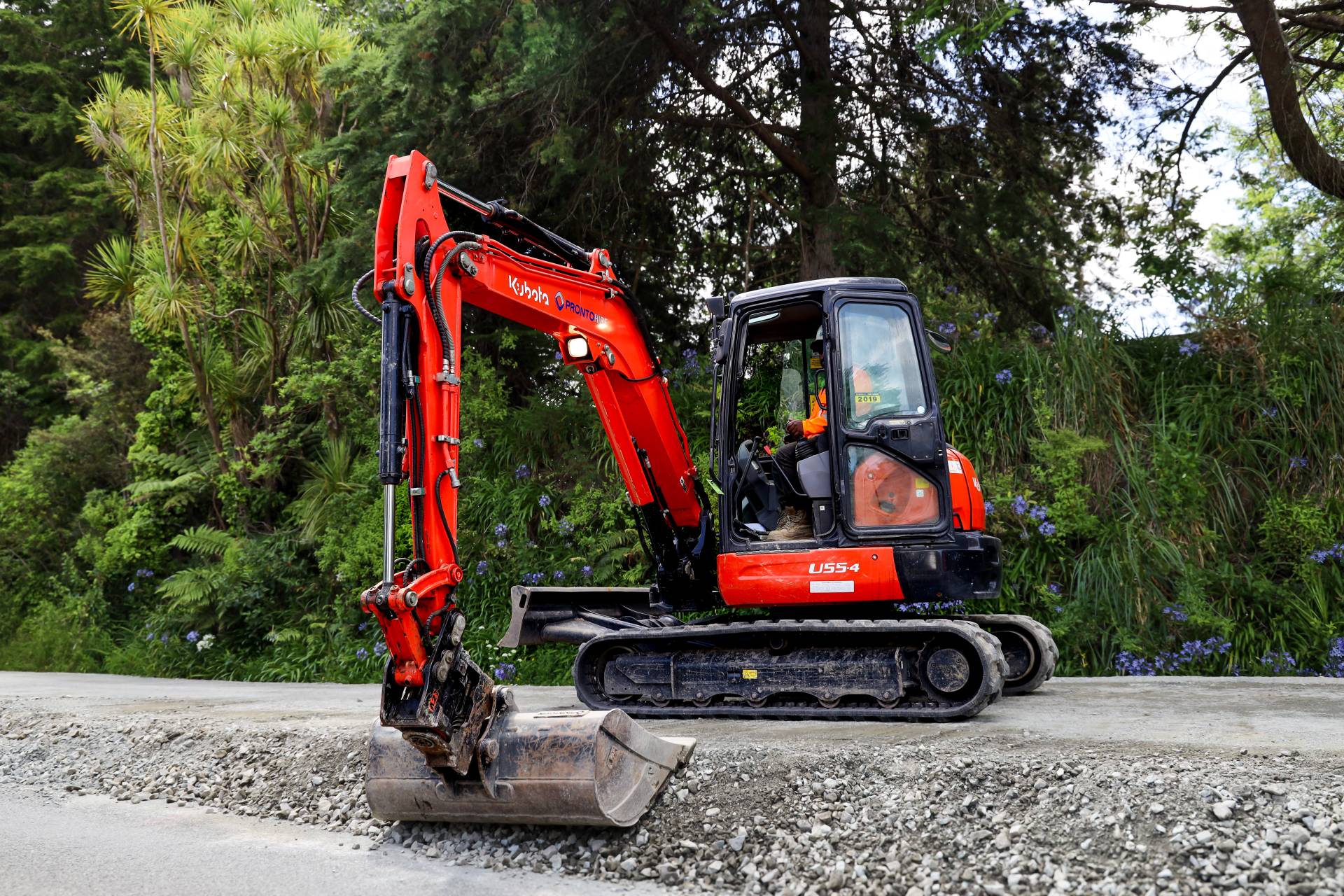
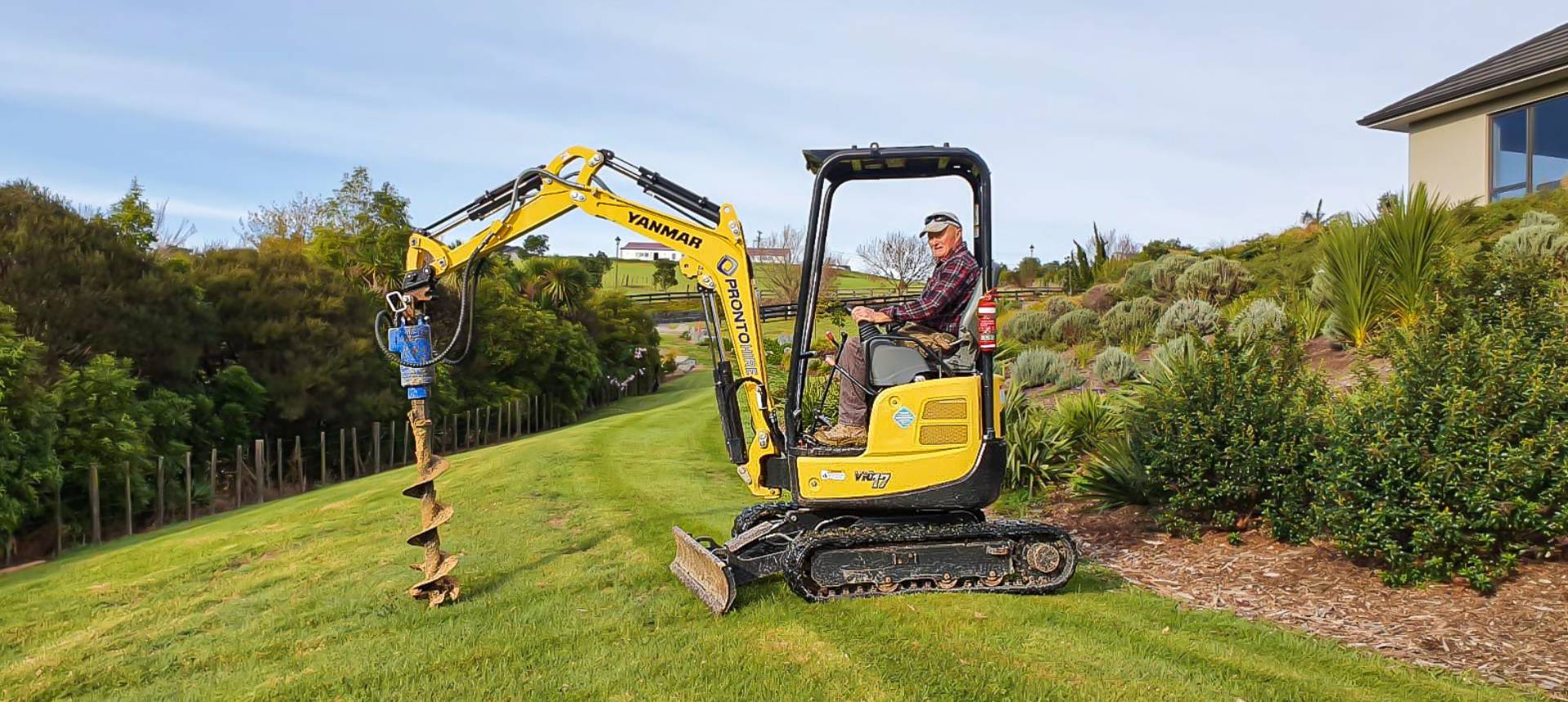
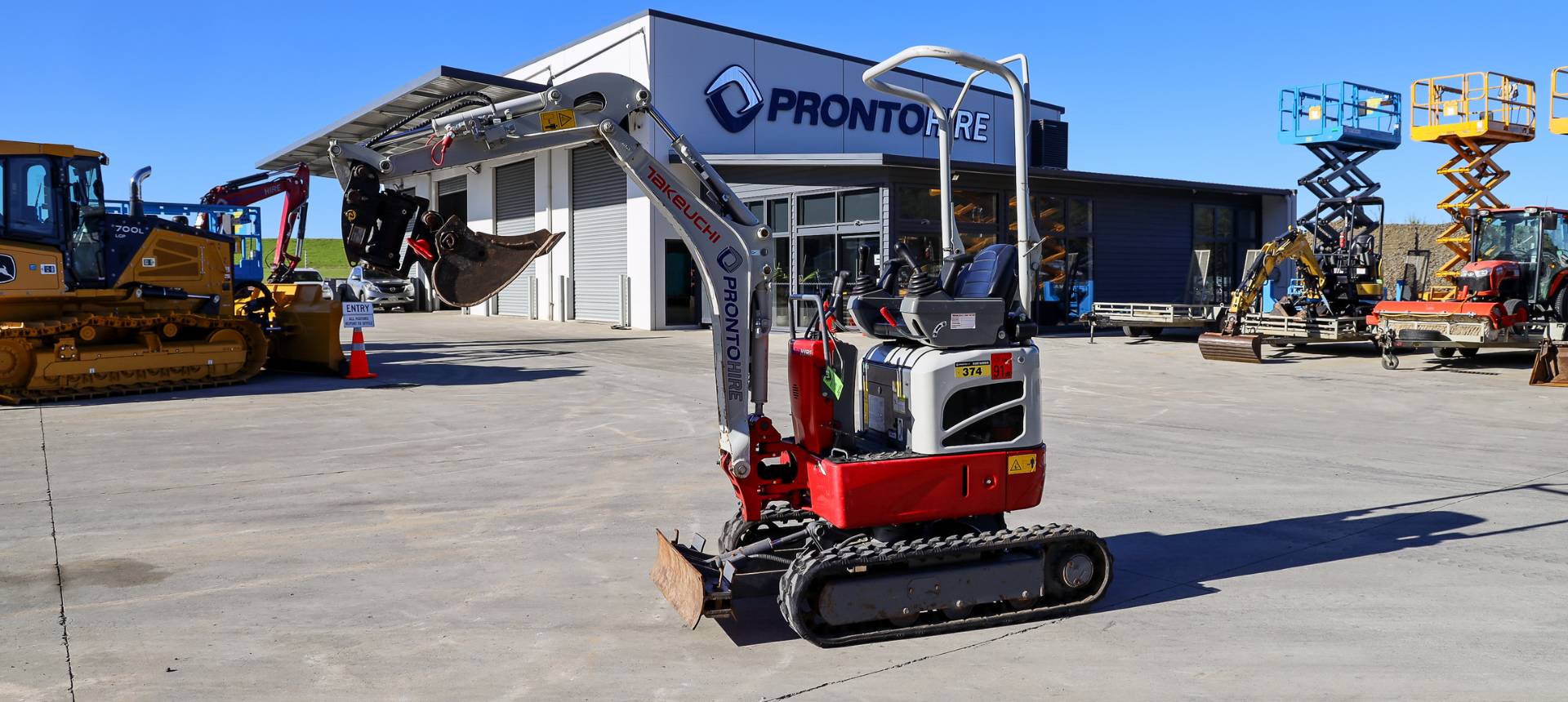
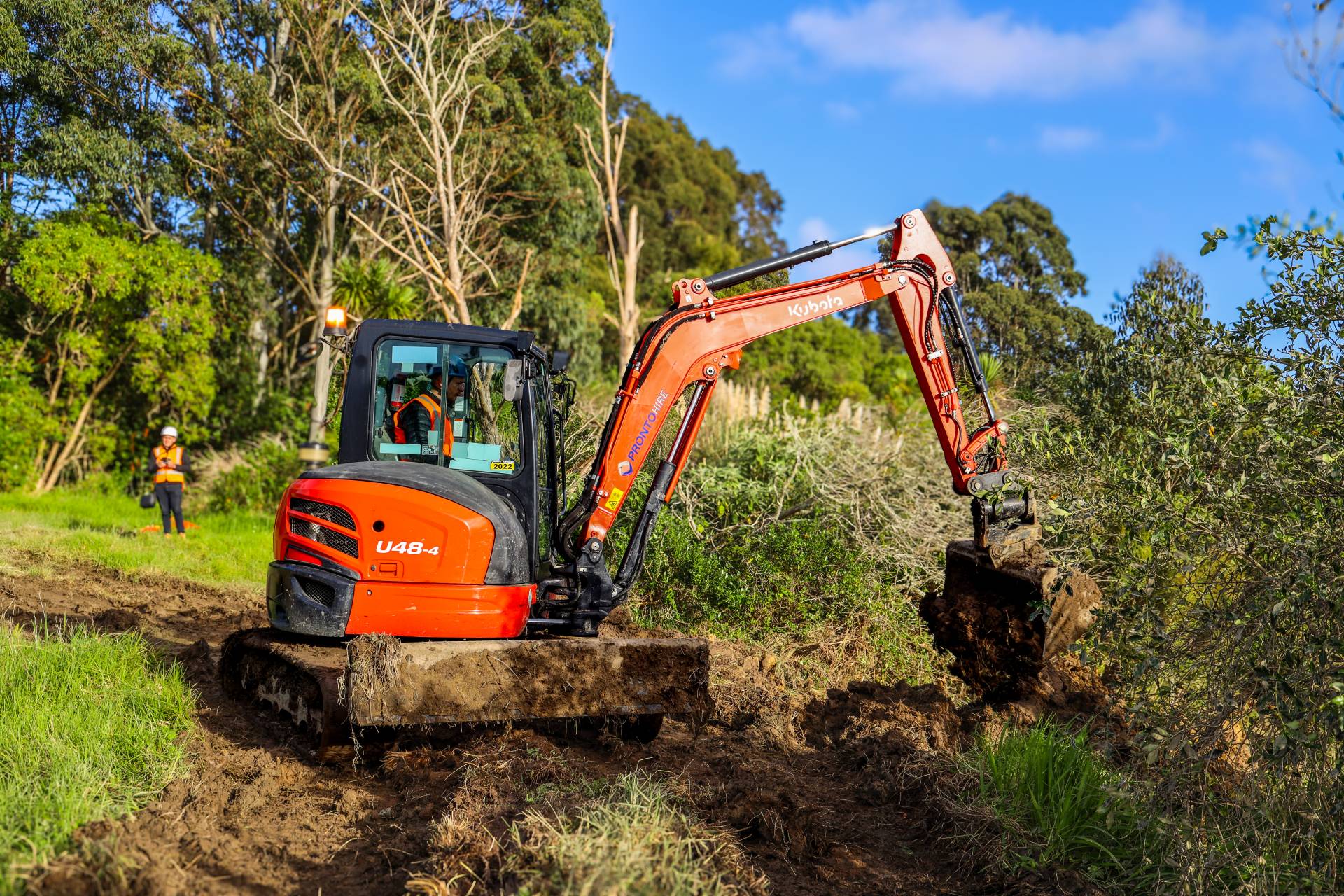
Mini excavators pack real digging power into a compact frame, and most run with zero or short tail swing, which makes them ideal for working close to fences, buildings, and other tight boundaries. Being small and light also means less ground disturbance, so they are the preferred option on finished lawns, established gardens, and sites where you cannot afford to leave track marks or compact the soil.
Mini diggers are easy to transport on a trailer, which means you can move between multiple small sites in a day without the hassle of a low loader. They are the right call for drainage work, footings, retaining wall trenches, garden landscaping, deck and fence post holes, and any job in a backyard, side yard, or other space a full sized machine simply will not fit into. Electric options are also available in this range for jobs where noise or emissions are a concern.
What they are not built for: shifting large volumes of material quickly, or digging to significant depth. If the job needs more grunt or a bigger bucket, step up a size.
Midi and Compact Excavators (roughly 5 to 10 ton)
Our midi and compact range includes:
Sitting between mini and medium, this class gives you more dig depth, reach and bucket capacity than a mini digger while still being manoeuvrable enough for moderately tight sites. Wheeled versions are also available at this size, useful if you are moving between sealed areas or want less surface disturbance on a finished yard.
Midi excavators handle house site drainage, culverts, larger footings, driveway cuts, and general earthworks where a mini digger would be underpowered but a full sized machine would be overkill.
Medium Excavators (roughly 13 to 15 ton)
Our medium excavator range includes:
This is the workhorse class for most commercial and residential construction sites, offering solid reach, dig depth and lift capacity without the size and access challenges of a large excavator. Short radius, wheeled and GPS machine control options are all available in this range, so you can match the configuration to the site rather than just the tonnage.
Medium excavators are common on site cuts, trenching for utilities, larger drainage and civil works, demolition, and general earthmoving where you need genuine capacity but the site still has some access constraints.
The trade-off at this size: heavier machines can mark up soft ground or finished surfaces, and a conventional swing model needs more clearance to rotate safely near boundaries, fences or structures.
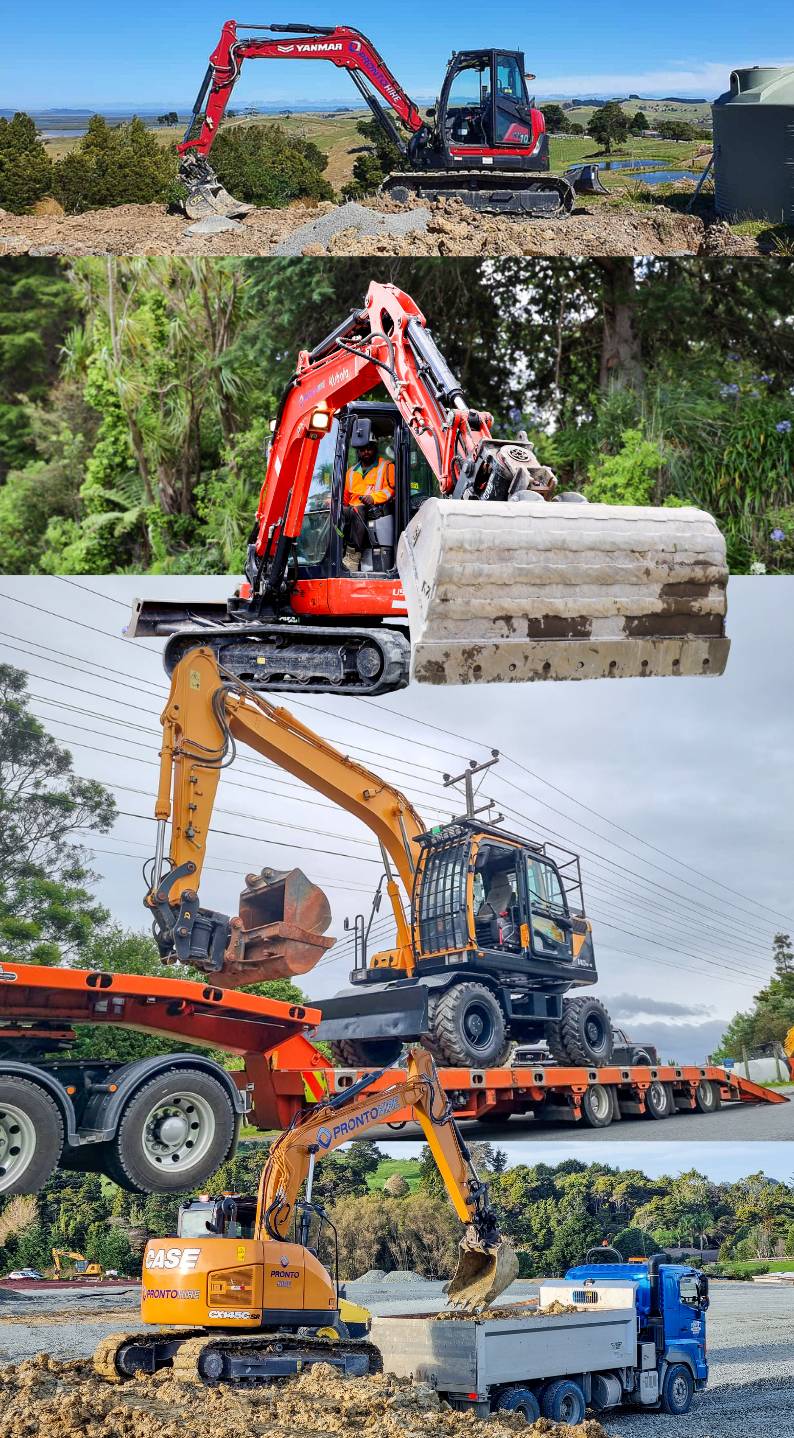
Large Excavators (roughly 20 to 30-plus ton)
Our large excavator range includes:
- 20 ton long reach
- 20 to 23 ton
- 23 to 25 ton short radius
- 23 to 25 ton GPS
- 30 ton
- 30 ton GPS
- 30 to 35 ton short radius
Built for major earthworks, bulk excavation, and large scale civil and demolition projects, this class delivers maximum dig depth, reach and load capacity. Long reach configurations extend that reach even further for jobs like riverbank or pond excavation, while short radius and GPS options are available for large sites that still need tight rotation control or precise grade work.
Large excavators are the right call for subdivision earthworks, foundations for commercial builds, bulk material shifting, and any project where speed and volume matter more than working in a confined space.
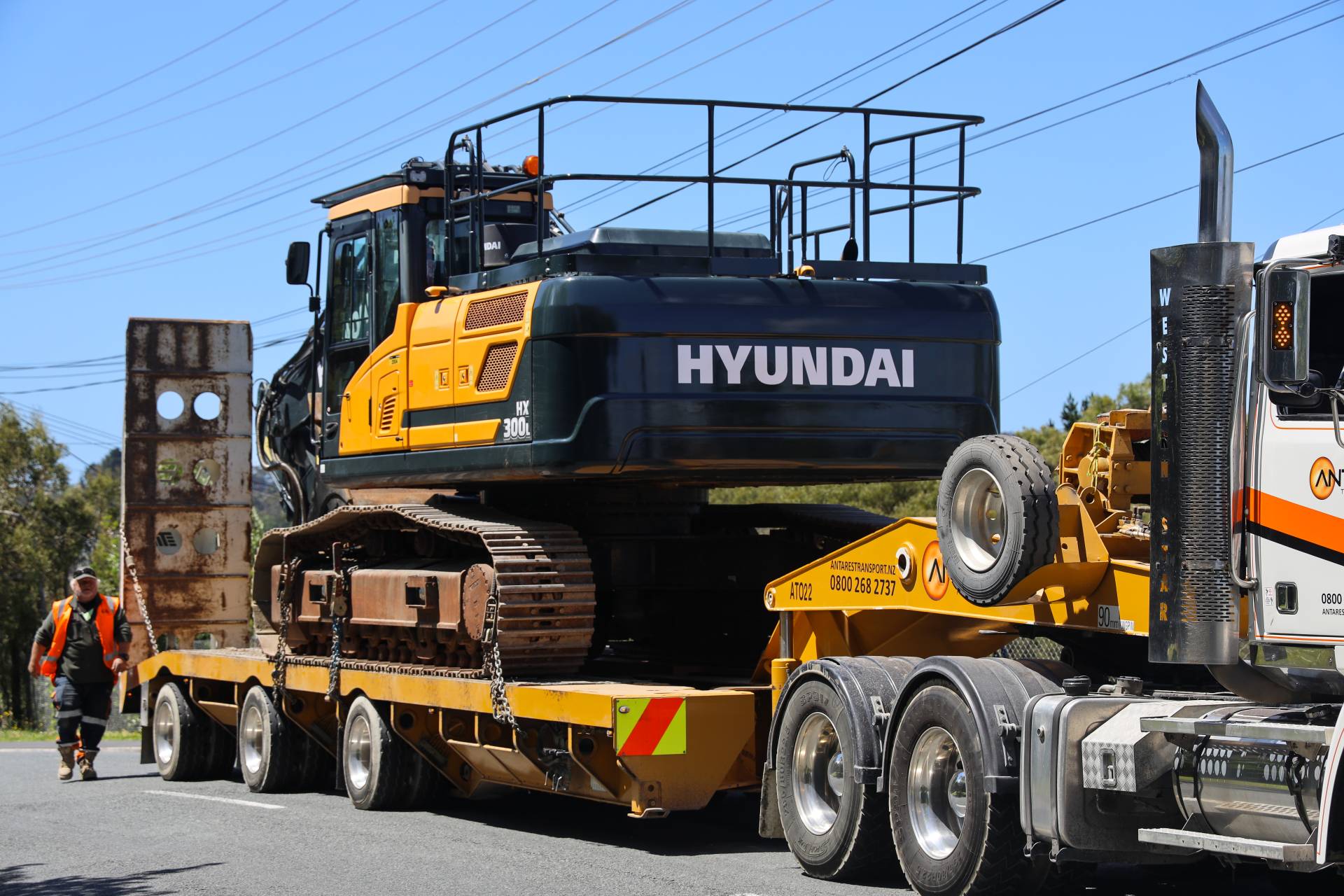
Getting a machine this size to site takes planning. Larger excavators generally travel by transporter, and depending on size, weight and route this can involve over dimension permits and route checks. If you are hiring at this end of the scale, factor delivery and site access into your planning early, or let Pronto Hire sort the logistics for you.
Matching the Excavator to Your Project
Once you know roughly what class of machine you are after, there are a handful of project-specific factors worth checking before you confirm your hire.
Boom reach determines how far the machine can dig or lift from a fixed position. Longer reach is useful where access is restricted, though it generally means slower cycle times compared to a shorter, more compact setup.
Dig depth is the maximum depth the machine can excavate to. Check this against your job, whether that is a shallow drainage trench or a deep foundation, and remember that attachments can extend capability if the base machine falls short.
Lift height matters if you are loading trucks, dumpers, or working at height on demolition. A machine that ticks every other box is no use if it cannot lift material where you need it to go.
Load capacity and bucket size should match the volume and speed you need. Moving a large volume of material with an undersized bucket wastes time and money, so if your job varies in scale, it is worth having a couple of bucket sizes on hand.
Terrain shapes the whole decision. Steeper, rougher or wetter ground calls for a heavier, tracked machine with good grip, while finished sites or sensitive ground call for a lighter machine that will not chew up the surface. Auckland's clay and volcanic ground, Waikato's flatter but often waterlogged paddocks, and Northland's mix of rural and tight urban access all bring their own considerations, so it pays to think about ground conditions specific to your site, not just the job type.
A Few Things to Sort Before You Start Digging
Before any excavation work begins, it is worth locating underground services on site. Services like beforeUdig provide free plans showing the approximate location of underground cables and pipes, and under the Health and Safety at Work Act, locating services before you dig is part of managing the risk properly. If you are working within a few metres of power poles or underground cables, check with your local network provider, as many require hand digging or a consent before machine excavation gets close.
If you plan to operate an excavator on the road, or anywhere the public has access, you will need a Wheels, Tracks and Rollers (WTR) endorsement on your full driver licence. This is separate to operating on a private site, where the requirement is simply that the operator is competent on the machine. Check what licensing your job requires before you book.
What Does Excavator Hire Cost?
Hire cost depends on the size of the machine, how long you need it, what attachments you add, and whether you want it delivered or want to arrange your own pickup. As a rough guide, mini diggers sit at the lower end of the cost scale, with larger excavators costing more per day due to their size, transport requirements and capability. All our excavator hire is dry hire, machine only, so you will need a competent operator for the job.
The best way to get an accurate number is to get in touch directly. Tell us the job, and we will match the machine and give you a straight answer on cost.
What size excavator do I need for a small backyard job?
For most residential jobs like drainage, garden beds, retaining walls or deck footings, a mini excavator in the 1.2 to 3.5 ton range is usually the right fit. These machines are compact enough to get through a standard gate and manoeuvre in a tight backyard, while still offering enough dig depth and power for the job.
Is an operator included with the hire?
No, all our excavator hire is dry hire, meaning the machine comes without an operator and you will need to supply a competent operator for the job. If you are operating on the road, or anywhere the public has access, you will also need a WTR endorsement on your licence.
Do you deliver excavators outside Auckland?
Yes, we service Auckland, Waikato and Northland, with pickup available from our Silverdale and Warkworth branches, or delivery direct to your site.
What attachments are available with excavator hire?
Buckets in a range of sizes, augers, breakers, rippers and grab attachments are all available to pair with your excavator, so get in touch and we will help you match the right attachment to the job.
How do I know if I need a wheeled or tracked excavator?
If you are working on soft, sloped or uneven ground, a tracked machine gives you better grip and stability. If you are moving across sealed surfaces or want to protect a finished driveway or yard, a wheeled excavator is the better fit.
Not Sure Which Digger You Need?
If you are still weighing up your options, get in touch with the Pronto Hire team and we will help you find the right excavator for the job. We run a wide fleet across Auckland, Waikato and Northland, from compact mini diggers to large excavators, with wheeled, short radius, long reach, GPS and electric configurations available depending on what your project calls for.
Check out our full excavator range here, or call us on 0800 77 66 86 to talk through your job and get matched with the right machine.
Similar
Articles
Donation
Request
While we appreciate the many causes that reach out to us, we are not able to support every request we receive. We carefully evaluate each opportunity to ensure alignment with our mission and resources. Thank you for your understanding.
Request
hire
Make an
enquiry

