




Summer Is Coming: Why It's Time to Swap Tracked Dumpers for Wheel Dumpers
A few months ago we were telling everyone to hire tracked dumpers. Sites were soft, accessways were rutted and anything on wheels was at risk of bogging down after a night of rain. Tracks were the safe call.
Summer changes that. Once the ground dries out and firms up, the job becomes about moving as much material as possible in a day, and that's where wheel dumpers come into their own.
At Pronto Hire we run a full range of tracked and wheel dumpers across Auckland, Waikato and Northland. Here's how to work out which one suits your site this summer, and why our 12 ton Hydremas have been busy already.
1. Why Tracks Win in Winter
Tracked dumpers spread their weight over a large footprint. That low ground pressure lets them work on soft, wet ground without sinking or tearing up the surface.
Tracked dumpers are the right call for:
- Muddy or waterlogged sites
- Soft fill and freshly worked ground
- Lawns, landscaping and sensitive surfaces
- Steep or slippery accessways
- Tight residential sites where rutting would mean extra clean-up
Our tracked range runs from the 800KG Cormidi C85 high tip up to the Morooka 11 ton tracked swivel dumper, so there's a size for most winter jobs.
2. Why Wheels Win in Summer
When the ground is firm, tracks lose most of their advantage. Wheel dumpers travel faster between the dig and the tip, which means quicker cycle times and more loads moved every hour.
A wheel dumper is a strong pick when:
- The site is dry and firm
- Haul distances are longer
- You are moving bulk material such as spoil, aggregate or sand
- You want to keep a digger loaded without waiting on the dumper
- The job runs to a tight summer programme
3. Articulated Dumpers for Bigger Jobs
Articulated dumpers bend in the middle, so the front and back can move independently. That helps them keep all wheels on the ground over uneven terrain and turn tightly on a busy site.
Our articulated range includes:
- Hydrema 912: 12 ton articulated dumper
- Hydrema 912HM: 12 ton articulated dumper
- Hydrema 922: 22 ton 6 wheel articulated dumper
- 30 ton articulated dumper
For most civil, subdivision and earthworks jobs, the 12 ton Hydrema is the sweet spot: big enough to move serious volume, small enough to get around a working site.
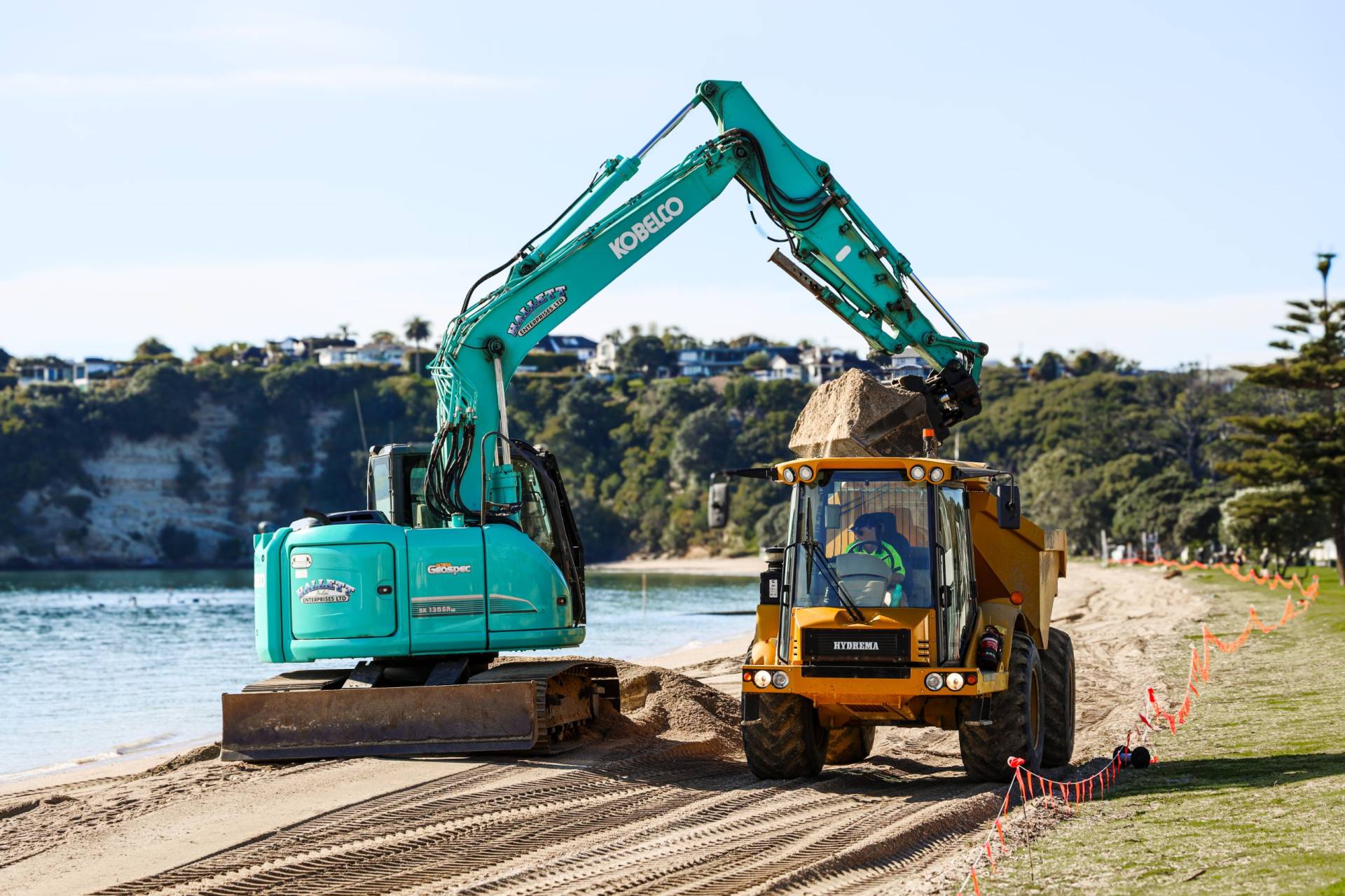
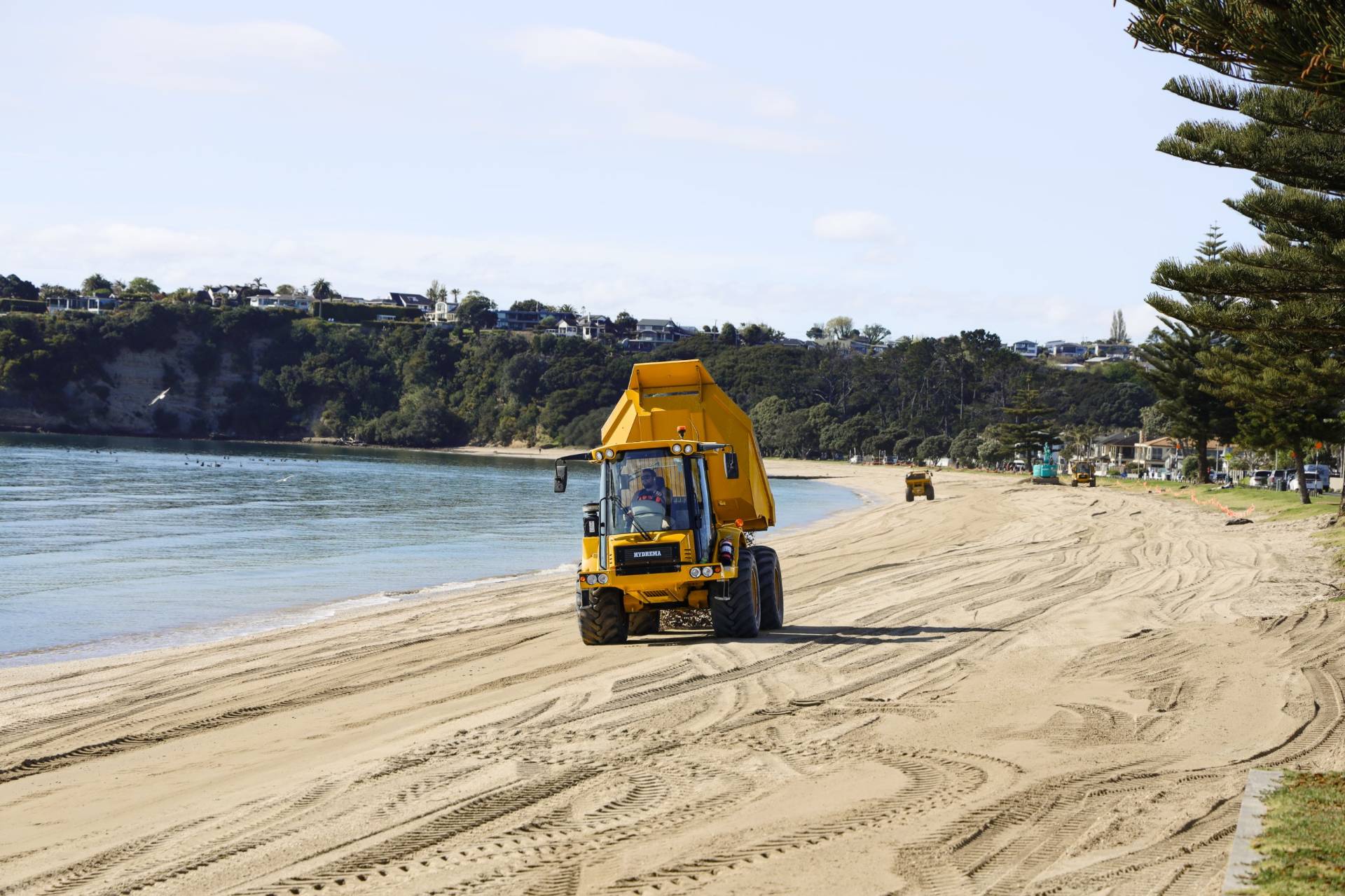
4. Hydremas on the Beach at Eastern Beach
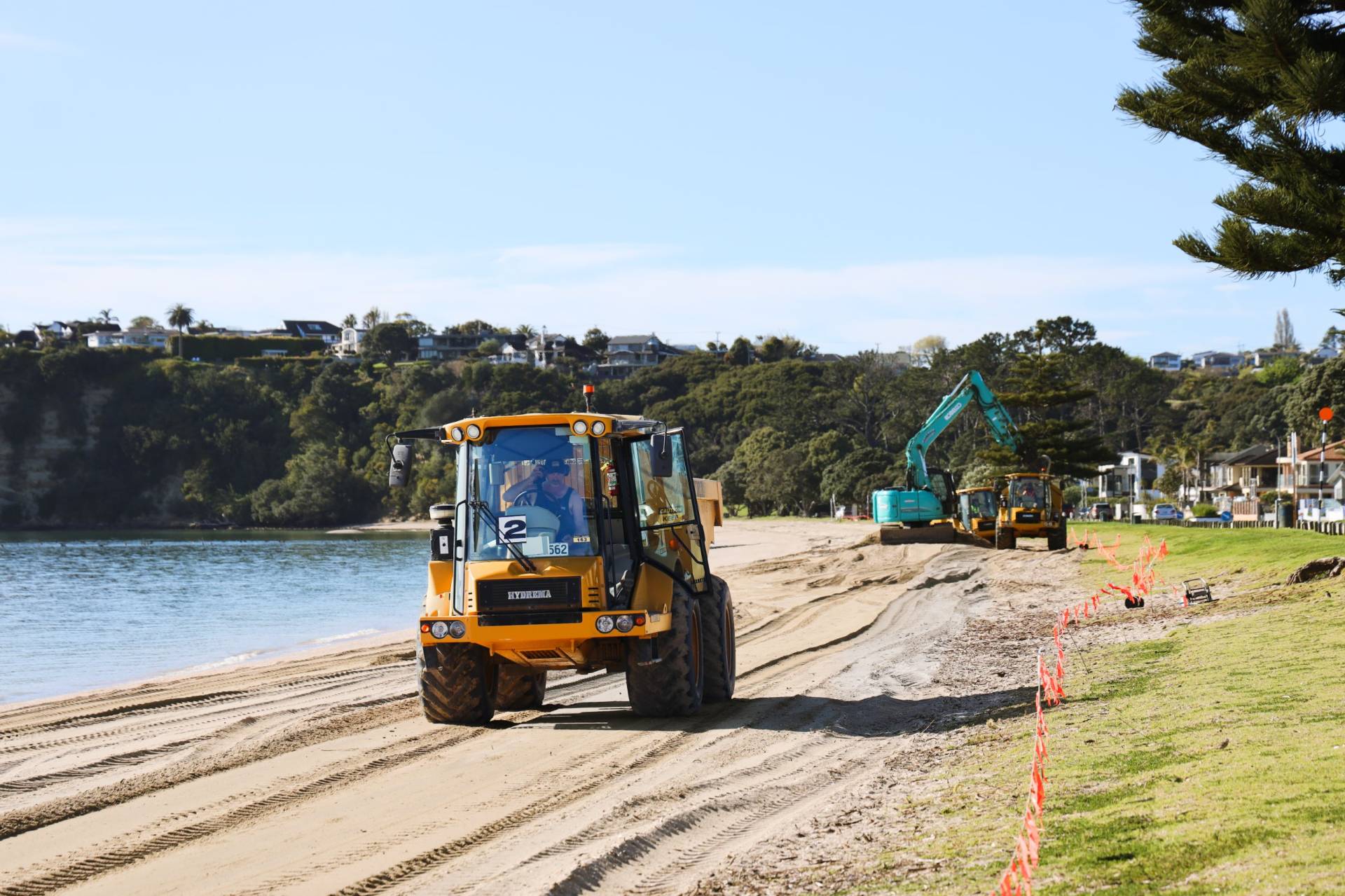
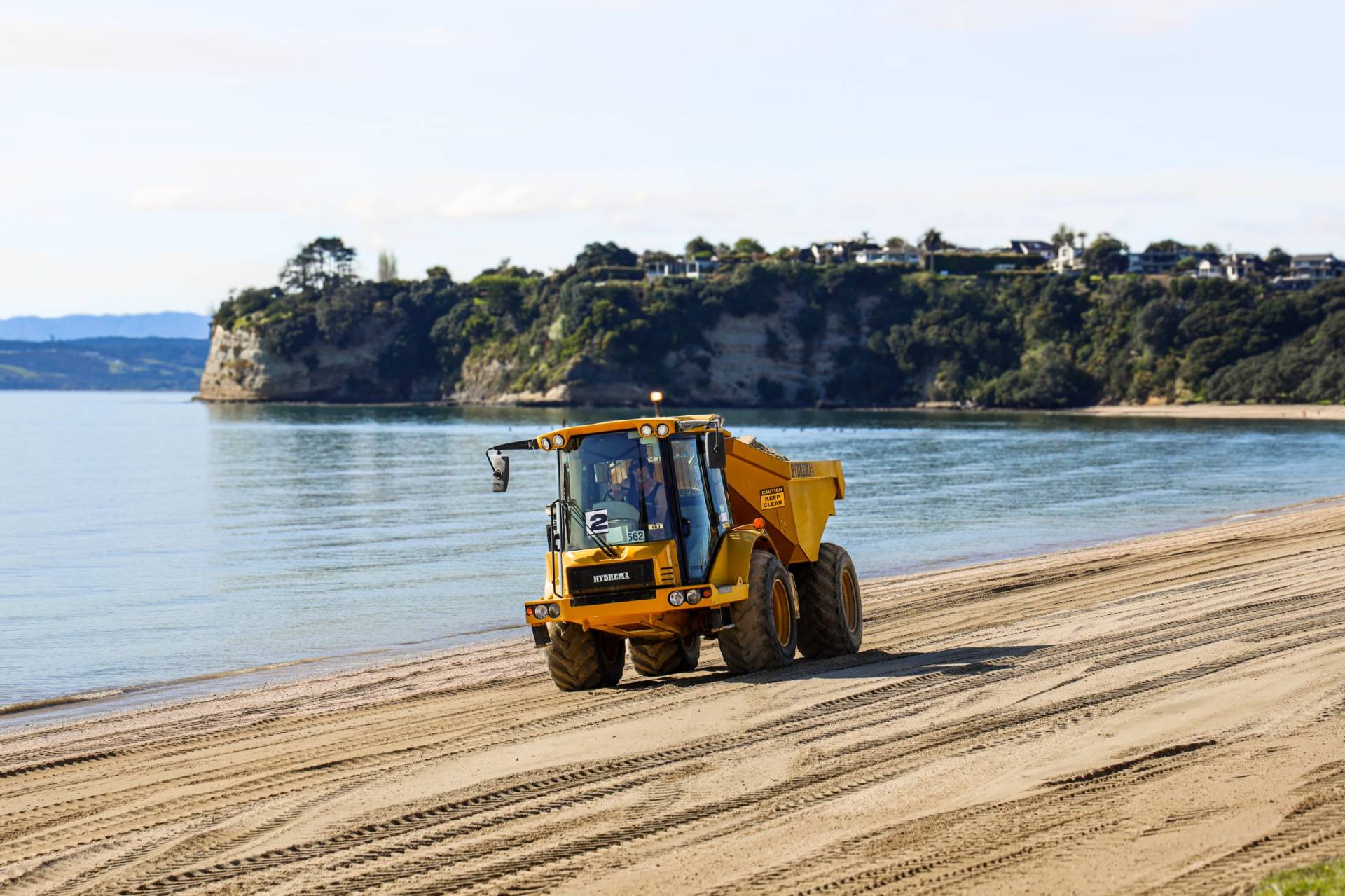
In October, three of our 12 ton Hydrema 912 dumpers spent the week shifting sand at Eastern Beach in East Auckland.
Sand is one of the harder materials to move. It's loose, heavy and unforgiving on the wrong machine. The Hydremas kept running load after load along the beach, with an excavator filling them and the dumpers spreading sand where it was needed.
It's a good example of what a wheel dumper does well once the conditions are right: plenty of capacity, quick turnarounds and steady progress across a big area.
5. Smaller Wheel Dumpers for Residential and Landscaping Work
Not every summer job needs a 12 ton machine. Site dumpers are ideal for smaller earthworks, driveways and landscaping, where the ground is firm but the space is limited.
Our wheel site dumper range includes:
- 1.5 ton site dumper with swivel tip
- 3 to 4 ton site dumper with swivel tip
- 6 ton site dumper with swivel tip
- 9 ton site dumper with straight tip
A swivel tip lets you drop material to the side, which helps when you are working along a trench, a retaining wall or a narrow access path.
6. When to Keep the Tracks On
Dry season does not mean every site is firm. Keep a tracked dumper on the job if:
- Your site holds water or stays soft after rain
- You are working on finished lawns or sensitive surfaces
- Access is steep or loose
- The forecast is unsettled and you cannot afford downtime
If you are unsure, talk to the team. We can help you weigh up the ground, the haul distance and the volume before you book.
SUMMER DUMPER CHECKLIST
Ground conditions: Is the site dry and firm, or does it still go soft after rain?
Haul distance: How far is it from the dig to the tip? Longer runs suit wheels.
Volume: How much material are you moving each day?
Access: Is there room for an articulated dumper to turn, or do you need something compact?
Tip style: Do you need a straight tip, swivel tip or high tip for the job?
FAQS
What is the difference between a tracked and a wheel dumper?
Tracked dumpers run on rubber tracks, which spread the load and suit soft or wet ground. Wheel dumpers run on tyres, which travel faster and suit firm, dry sites.
Are wheel dumpers better in summer?
On dry, firm sites, usually yes. Faster travel means quicker cycle times and more material moved in a day.
What is an articulated dumper?
An articulated dumper has a pivot between the cab and the bin. It keeps the wheels in contact with uneven ground and allows tight turning on site.
What size dumper do I need?
It depends on your volumes and access. Site dumpers from 1.5 to 9 ton suit smaller jobs. For bulk earthworks, a 12 ton Hydrema or larger articulated dumper is the better fit.
Can I still use a tracked dumper in summer?
Yes. Tracked dumpers remain the better choice for soft ground, lawns, steep access and sensitive surfaces, whatever the season.
Do you deliver dumpers to site?
Yes. Our transport team delivers across Auckland, Waikato and Northland.
Plan your summer dumper hire with Pronto Hire
Whether it's a 1.5 ton site dumper for a backyard job or a fleet of 12 ton Hydremas for bulk earthworks, we'll help you match the machine to the ground. Talk to the team and get it booked in before the summer rush.
📧 hire@prontohire.co.nz
📞 0800 PRONTO (77 66 86)
🌐 prontohire.co.nz
📍 Warkworth: 34 Goatley Road | Silverdale: 86 Forge Road
Donation
Request
While we appreciate the many causes that reach out to us, we are not able to support every request we receive. We carefully evaluate each opportunity to ensure alignment with our mission and resources. Thank you for your understanding.
Request
hire
Make an
enquiry

